Build a Professional Musician Website | No Code Needed
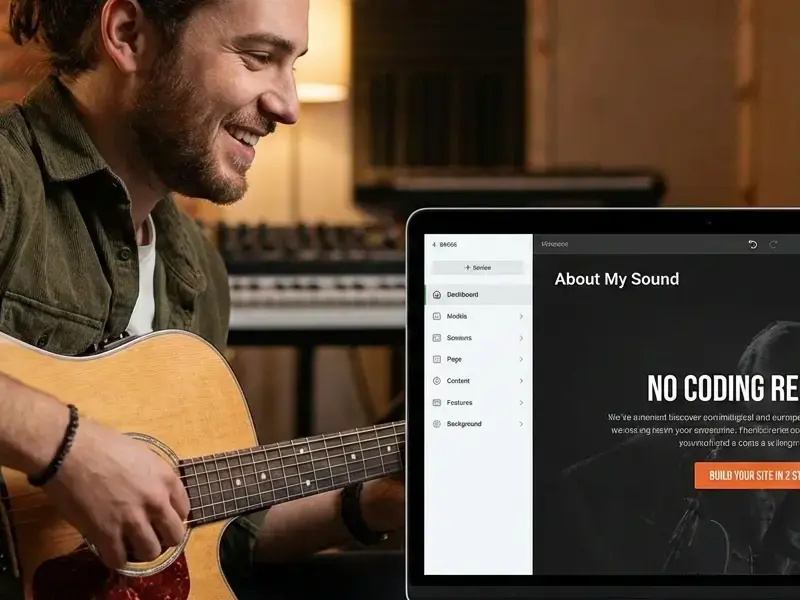

The business side of music often feels like a wall standing between you and your instrument. You have been recording and performing for a while now, perhaps a year or two, and the initial excitement is being replaced by a nagging sense of stagnation. You know you need a "home base" that isn't just a social media profile, but the thought of navigating complex plugins or paying for an expensive developer is exhausting.
A website is your digital headquarters, the place where you control the narrative, and it serves as the ultimate professional signal to booking agents. You do not need to be a programmer to look like a pro.
Focus on the Essentials, Not the Fluff
Many artists fail because they try to build a digital monument instead of a functional tool. A visitor should know exactly who you are and what you sound like within five seconds of landing on your page.
In the Home tab of your dashboard, you should focus on a high-quality hero image and a clear H1 title. This is not the place for cryptic poetry. State your name and your genre clearly so that a festival scout knows exactly what they are looking at. Your website needs to do the heavy lifting for you while you are busy in the studio.
Make Your Music the Centerpiece
Social media platforms are designed to keep people scrolling, but your website is designed to make them listen. Instead of sending fans to a third-party link tree, embed your music directly where they can see your branding.
Using the Sound tab allows you to drop in a Spotify embed link instantly. This keeps the listener on your page and increases your stream conversion rates. When a label executive or a potential manager visits your site, they should be able to press play without ever leaving your ecosystem.
Prove That You are an Active Artist
Static websites are where careers go to die. If your last "latest news" post was from 2022, a booking agent will assume you have quit. You need a dedicated space for live dates that looks organized and intentional.
The Shows tab on About My Sound simplifies this by giving you a structured layout for every gig. Each entry includes:
- The title of the event or venue.
- A clear date and description.
- A direct link for fans to buy tickets.
Keeping this section updated shows the industry that you have momentum. It transforms your website from a resume into a live, breathing representation of your career.
Tell Your Story Without the Noise
Your "About" page is often the second most visited part of your site. Fans want to connect with the person behind the lyric, but they don't want to read a five-page essay. Use the About tab to upload a compelling image and a concise bio.
This is also the place to consolidate your digital footprint. Instead of hoping fans find your newsletter or your Discord, use the dedicated social media and newsletter fields to bridge the gap. By centraliveing these links, you turn a casual visitor into a long-term community member.